Taking the Work Out of Networking
A practical case for replacing transactional networking with low-pressure relationship maintenance, so discovery practitioners can build trust before they need alignment, access, or sponsorship.
Reading Room
Shelves
A practical case for replacing transactional networking with low-pressure relationship maintenance, so discovery practitioners can build trust before they need alignment, access, or sponsorship.
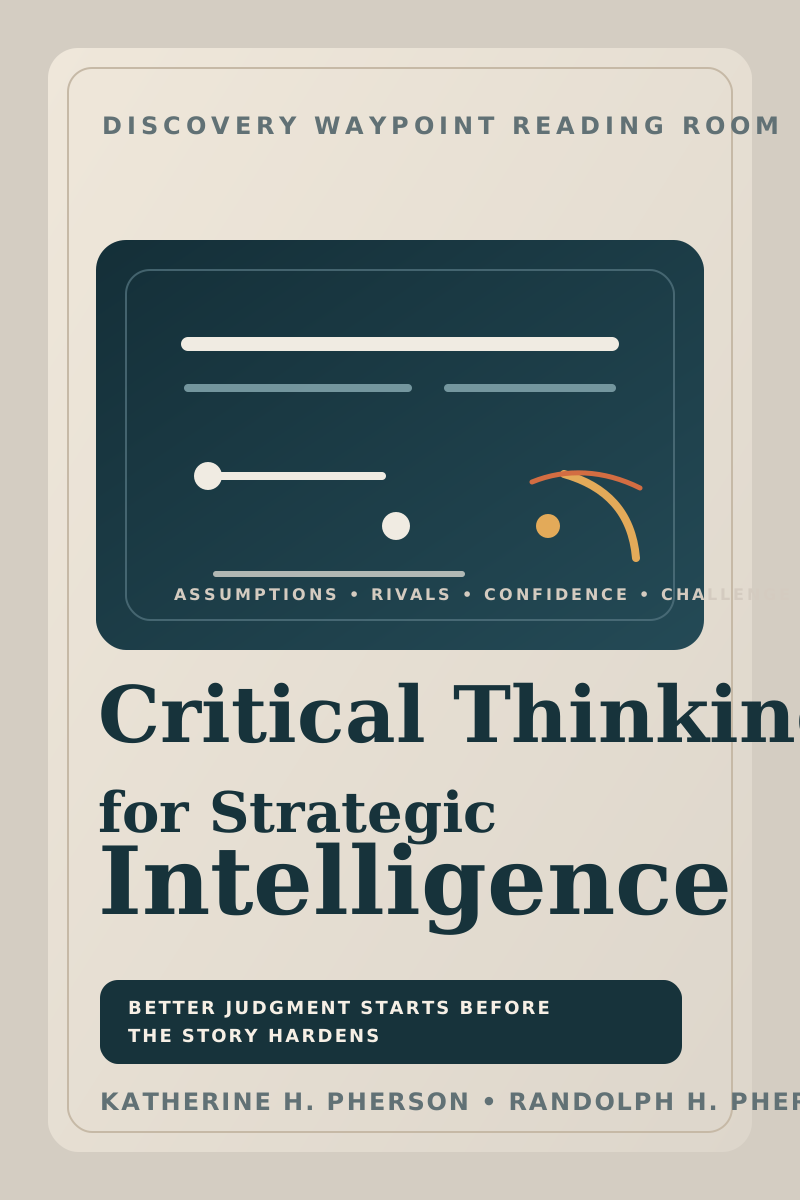
A judgment-discipline brief on how to stop polished discovery outputs from outrunning the evidence beneath them by exposing assumptions, testing rival explanations, and showing confidence honestly.
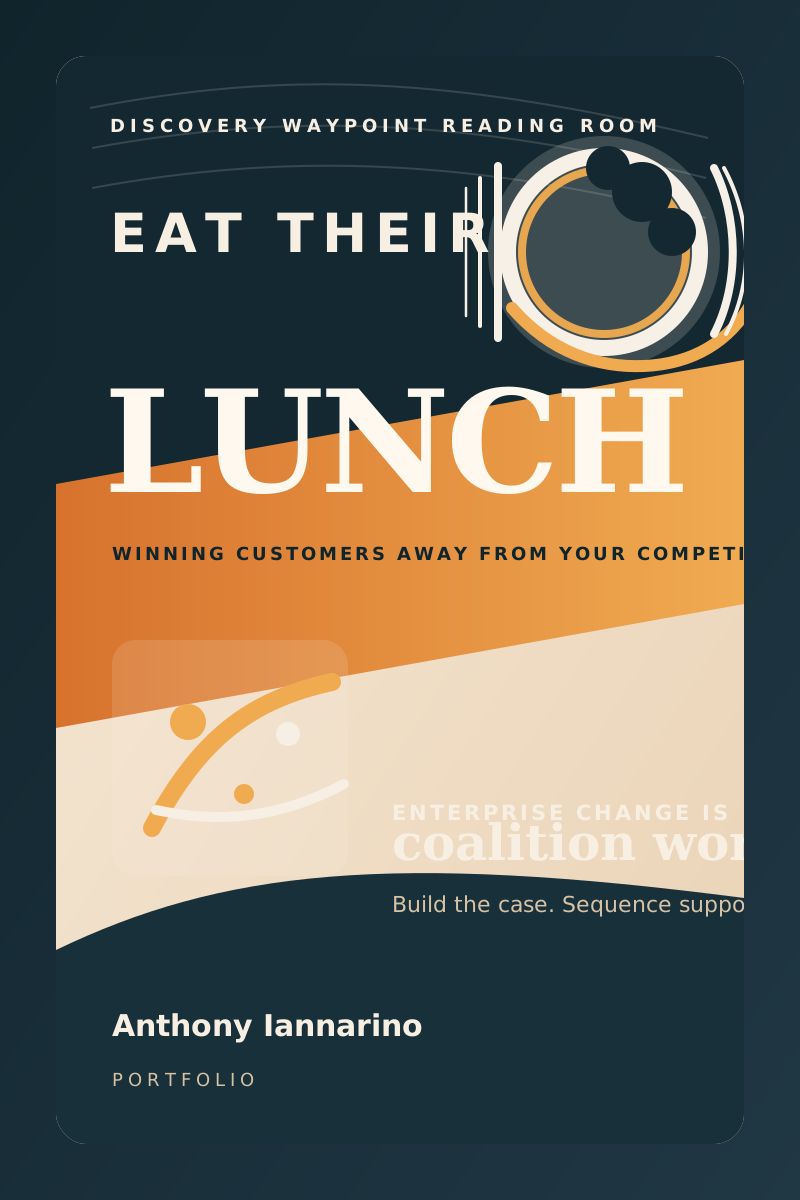
A planner-led brief on how to make incumbent replacement feel safer than standing still by building a stronger case for change, mapping the stakeholder coalition, and sequencing the path to decision.
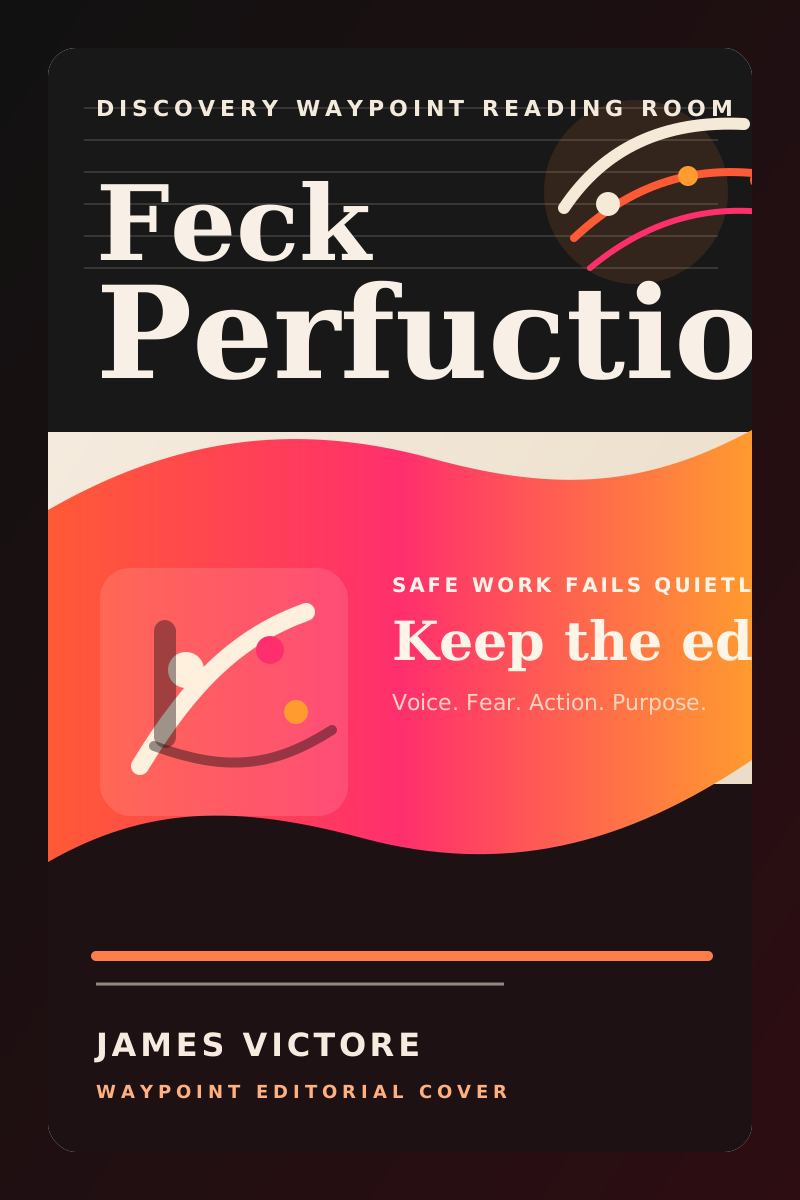
A provocative planner-led brief on how fear, perfectionism, and approval-seeking drain the life out of creative work, and how stronger opinion, faster action, and clearer purpose lead to more distinctive decisions.
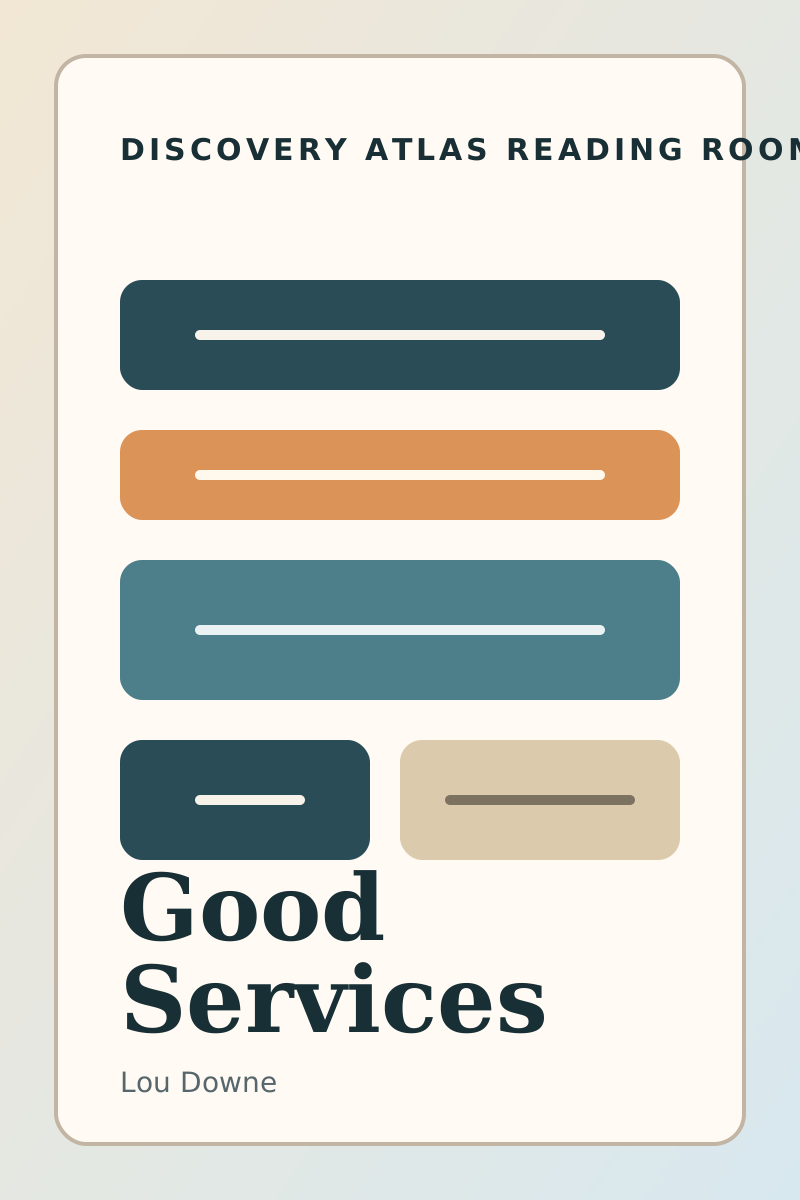
A practical argument that a service only works when the whole system around a user's goal works, not just the touchpoint the organisation happens to own.
A practical argument for doing just enough structured user research to make decisions defensible — without turning discovery into a slow, academic exercise.
Theme cluster
Getting past polite answers and improving the quality of discovery conversations.
Book Brief
understand needs · validate
Best for
Planning interviews or early discovery before problem framing or journey mapping.
A practical argument for doing just enough structured user research to make decisions defensible — without turning disc…
Method bridge: Interview Discussion Guide Workshop
Theme cluster
Moving teams from assumption and enthusiasm to observable signal.
Book Brief
align · understand needs
Best for
Preparing for sponsor alignment, participant recruitment, or cross-functional discovery work where access depends on relationships.
A practical case for replacing transactional networking with low-pressure relationship maintenance, so discovery practi…
Method bridge: Stakeholder Mapping
Theme cluster
Improving how teams frame, run, and interpret discovery work.
Book Brief
validate · decide
Best for
This fits ambiguous or politically charged work where the visible risk is not lack of activity, but the speed with which a plausible in…
A judgment-discipline brief on how to stop polished discovery outputs from outrunning the evidence beneath them by expo…
Method bridge: Assumption Mapping
Theme cluster
Making the end-to-end experience legible across channels, handoffs, and pain points.
Book Brief
map · decide
Best for
This best fits teams working on multi-step, multi-channel services with several internal owners, where no single interface or team can…
A practical argument that a service only works when the whole system around a user's goal works, not just the touchpoin…
Method bridge: Service Blueprinting
Theme cluster
Turning fragmented observations into a coherent shared picture.
Book Brief
validate · decide
Best for
This fits ambiguous or politically charged work where the visible risk is not lack of activity, but the speed with which a plausible in…
A judgment-discipline brief on how to stop polished discovery outputs from outrunning the evidence beneath them by expo…
Method bridge: Assumption Mapping
Theme cluster
Connecting customer experience signals to backstage realities and team coordination.
Book Brief
align · decide
Best for
Mature enterprise situations where several functions are living with an imperfect setup because the current arrangement still feels les…
A planner-led brief on how to make incumbent replacement feel safer than standing still by building a stronger case for…
Method bridge: Stakeholder Mapping
Theme cluster
Helping teams move once enough signal exists, without sanding stronger options into the least objectionable choice.
Book Brief
ideate · decide
Best for
This best fits work in product, service, brand, proposition, or communications territory where a memorable point of view matters and th…
A provocative planner-led brief on how fear, perfectionism, and approval-seeking drain the life out of creative work, a…
Method bridge: Concept Poster / Concept Cards
Engagement pattern
understand needs
Workflow cue
A team is rushing from stakeholder opinions into problem framing without enough participant evidence.
Get concrete behavior and decision evidence before the team hardens the problem frame, opportunity statement, or assump…
Best used across fit · plan · outputs
Principle
Judgment principle
Sharpens
Discovery gets noisy when stakeholder intuition is treated like field signal. This principle protects technique choice, workshop framin…
Waypoint should tighten the evidence base before teams harden a solution frame, opportunity, or assumption wall.
Grounded in 1 source
Learning path
Best for building judgment
Start here if
Use this path when the work feels too assumptive upstream of alignment or decision workshops.
Start with better participant evidence, then carry that signal into framing, assumptions, and stakeholder alignment.
4 steps toward a discovery plan that enters workshops with better evidence discipline and clearer alignment on what counts as r…
Book Brief
validate · decide
Best for
This fits ambiguous or politically charged work where the visible risk is not lack of activity, but the speed with which a plausible in…
A judgment-discipline brief on how to stop polished discovery outputs from outrunning the evidence beneath them by expo…
Method bridge: Assumption Mapping
Book Brief
align · decide
Best for
Mature enterprise situations where several functions are living with an imperfect setup because the current arrangement still feels les…
A planner-led brief on how to make incumbent replacement feel safer than standing still by building a stronger case for…
Method bridge: Stakeholder Mapping
Book Brief
understand needs · validate
Best for
Planning interviews or early discovery before problem framing or journey mapping.
A practical argument for doing just enough structured user research to make decisions defensible — without turning disc…
Method bridge: Interview Discussion Guide Workshop
Book Brief
understand needs · align
Best for
This best fits cross-functional work where interviews, alignment sessions, or steering conversations keep producing brittle, overly pol…
A planner-led brief on why discovery conversations break when people are having different kinds of conversations at the…
Method bridge: Interview Discussion Guide Workshop
Book Brief
understand needs · validate
Best for
This fits low-maturity teams with partial UX buy-in, fragmented evidence, and no reliable discovery structure, but still a genuine need…
A planner-led brief on how one practitioner can use lightweight evidence, shared principles, portable artifacts, and st…
Method bridge: Experience Principles Workshop
Engagement pattern
understand needs
Workflow cue
A team is rushing from stakeholder opinions into problem framing without enough participant evidence.
Get concrete behavior and decision evidence before the team hardens the problem frame, opportunity statement, or assump…
Best used across fit · plan · outputs
Engagement pattern
understand needs
Workflow cue
A team wants a journey map but the current evidence base is uneven, anecdotal, or too encouraging.
Tighten interview evidence before expanding to an end-to-end map so the artifact becomes a decision tool instead of a p…
Best used across fit · plan · outputs
Principle
Judgment principle
Sharpens
Discovery gets noisy when stakeholder intuition is treated like field signal. This principle protects technique choice, workshop framin…
Waypoint should tighten the evidence base before teams harden a solution frame, opportunity, or assumption wall.
Grounded in 1 source
Learning path
Best for building judgment
Start here if
Use this path when the work feels too assumptive upstream of alignment or decision workshops.
Start with better participant evidence, then carry that signal into framing, assumptions, and stakeholder alignment.
4 steps toward a discovery plan that enters workshops with better evidence discipline and clearer alignment on what counts as r…
Book Brief
understand needs · validate
Best for
Planning interviews or early discovery before problem framing or journey mapping.
A practical argument for doing just enough structured user research to make decisions defensible — without turning disc…
Method bridge: Interview Discussion Guide Workshop
Book Brief
understand needs · align
Best for
This best fits cross-functional work where interviews, alignment sessions, or steering conversations keep producing brittle, overly pol…
A planner-led brief on why discovery conversations break when people are having different kinds of conversations at the…
Method bridge: Interview Discussion Guide Workshop
Book Brief
understand needs · validate
Best for
This fits low-maturity teams with partial UX buy-in, fragmented evidence, and no reliable discovery structure, but still a genuine need…
A planner-led brief on how one practitioner can use lightweight evidence, shared principles, portable artifacts, and st…
Method bridge: Experience Principles Workshop
Engagement pattern
understand needs
Workflow cue
A team is rushing from stakeholder opinions into problem framing without enough participant evidence.
Get concrete behavior and decision evidence before the team hardens the problem frame, opportunity statement, or assump…
Best used across fit · plan · outputs
Principle
Judgment principle
Sharpens
Discovery gets noisy when stakeholder intuition is treated like field signal. This principle protects technique choice, workshop framin…
Waypoint should tighten the evidence base before teams harden a solution frame, opportunity, or assumption wall.
Grounded in 1 source
Learning path
Best for building judgment
Start here if
Use this path when the work feels too assumptive upstream of alignment or decision workshops.
Start with better participant evidence, then carry that signal into framing, assumptions, and stakeholder alignment.
4 steps toward a discovery plan that enters workshops with better evidence discipline and clearer alignment on what counts as r…
Book Brief
map · risk
Best for
This is strongest in complex service or organisational work where several teams, constraints, and decisions interact, and where previou…
A durable editorial brief on how to stop treating recurring service and organisational problems as isolated events, and…
Method bridge: Service Blueprinting
Engagement pattern
map
Workflow cue
A team can describe customer pain points but not the handoffs, systems, or ownership gaps behind them.
Expose the operational dependencies behind a customer journey before the team turns friction into a prioritised action…
Best used across plan · outputs · decision
Principle
Judgment principle
Sharpens
Journey artifacts become decorative when the decision boundary, scope, and intended use are vague. This principle keeps mapping work ti…
Journey and service maps are worth doing only when they sharpen a real decision, not when they merely create a polished…
Changes how you use Customer Journey Mapping
Principle
Judgment principle
Sharpens
Teams often agree on customer pain while disagreeing on what is causing it. Making the backstage visible sharpens alignment, planning,…
Good discovery artifacts make the invisible operational dependencies legible, not just the customer-facing pain points.
Changes how you use Customer Journey Mapping
Learning path
Best for building judgment
Start here if
Use this path when the team can describe the pain point but still cannot see the service changes required behind it.
Move from stronger evidence into journey, service, and action artifacts that change what the team does next.
3 steps toward a shared end-to-end view that exposes dependencies, supports prioritisation, and turns synthesis into an action…
Book Brief
map · risk
Best for
This is strongest in complex service or organisational work where several teams, constraints, and decisions interact, and where previou…
A durable editorial brief on how to stop treating recurring service and organisational problems as isolated events, and…
Method bridge: Service Blueprinting
Engagement pattern
map
Workflow cue
A team can describe customer pain points but not the handoffs, systems, or ownership gaps behind them.
Expose the operational dependencies behind a customer journey before the team turns friction into a prioritised action…
Best used across plan · outputs · decision
Engagement pattern
understand needs
Workflow cue
A team wants a journey map but the current evidence base is uneven, anecdotal, or too encouraging.
Tighten interview evidence before expanding to an end-to-end map so the artifact becomes a decision tool instead of a p…
Best used across fit · plan · outputs
Principle
Judgment principle
Sharpens
Journey artifacts become decorative when the decision boundary, scope, and intended use are vague. This principle keeps mapping work ti…
Journey and service maps are worth doing only when they sharpen a real decision, not when they merely create a polished…
Changes how you use Customer Journey Mapping
Principle
Judgment principle
Sharpens
Teams often agree on customer pain while disagreeing on what is causing it. Making the backstage visible sharpens alignment, planning,…
Good discovery artifacts make the invisible operational dependencies legible, not just the customer-facing pain points.
Changes how you use Customer Journey Mapping
Learning path
Best for building judgment
Start here if
Use this path when the team can describe the pain point but still cannot see the service changes required behind it.
Move from stronger evidence into journey, service, and action artifacts that change what the team does next.
3 steps toward a shared end-to-end view that exposes dependencies, supports prioritisation, and turns synthesis into an action…
Book Brief
map · decide
Best for
This best fits teams working on multi-step, multi-channel services with several internal owners, where no single interface or team can…
A practical argument that a service only works when the whole system around a user's goal works, not just the touchpoin…
Method bridge: Service Blueprinting
Book Brief
map · risk
Best for
This is strongest in complex service or organisational work where several teams, constraints, and decisions interact, and where previou…
A durable editorial brief on how to stop treating recurring service and organisational problems as isolated events, and…
Method bridge: Service Blueprinting
Engagement pattern
map
Workflow cue
A team can describe customer pain points but not the handoffs, systems, or ownership gaps behind them.
Expose the operational dependencies behind a customer journey before the team turns friction into a prioritised action…
Best used across plan · outputs · decision
Principle
Judgment principle
Sharpens
Journey artifacts become decorative when the decision boundary, scope, and intended use are vague. This principle keeps mapping work ti…
Journey and service maps are worth doing only when they sharpen a real decision, not when they merely create a polished…
Changes how you use Customer Journey Mapping
Principle
Judgment principle
Sharpens
Teams often agree on customer pain while disagreeing on what is causing it. Making the backstage visible sharpens alignment, planning,…
Good discovery artifacts make the invisible operational dependencies legible, not just the customer-facing pain points.
Changes how you use Customer Journey Mapping
Learning path
Best for building judgment
Start here if
Use this path when the team can describe the pain point but still cannot see the service changes required behind it.
Move from stronger evidence into journey, service, and action artifacts that change what the team does next.
3 steps toward a shared end-to-end view that exposes dependencies, supports prioritisation, and turns synthesis into an action…
Book Brief
understand needs · align
Best for
This best fits cross-functional work where interviews, alignment sessions, or steering conversations keep producing brittle, overly pol…
A planner-led brief on why discovery conversations break when people are having different kinds of conversations at the…
Method bridge: Interview Discussion Guide Workshop
Book Brief
understand needs · validate
Best for
This fits low-maturity teams with partial UX buy-in, fragmented evidence, and no reliable discovery structure, but still a genuine need…
A planner-led brief on how one practitioner can use lightweight evidence, shared principles, portable artifacts, and st…
Method bridge: Experience Principles Workshop